


The Lindsay Clancy trial has ended in a mistrial after the jury failed to reach a unanimous decision on whether Clancy should be held criminally responsible, beyond a reasonable doubt, for the deaths of her three children.
Across two television appearances over the past week—bookending the trial’s collapse—I offered what amounts to a consistent, two-part reading of the case: one clinical, one civic.
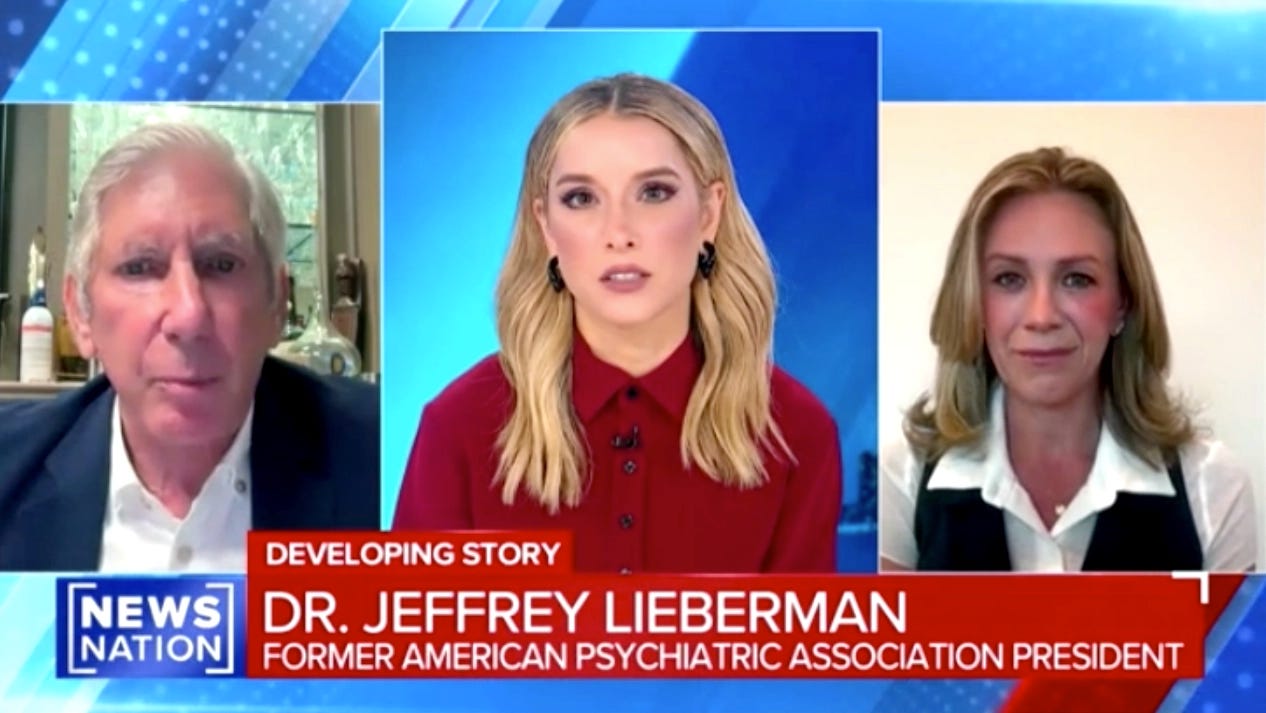
The first appearance came mid-deliberation, when I joined NewsNation’s Lauren Wright alongside defense attorney Katie Cherkasky to help viewers parse the competing expert testimony jurors faced. I was candid there about the discipline I practice: psychiatry is, in many ways, the stepchild of medicine, and laypeople struggle to weigh psychiatric evidence the way they might weigh an X-ray or a lab result. I also pointed to something happening outside the jury room—courthouse clashes between the case’s supporters and critics were producing a kind of “NIMBY syndrome,” pressuring the judge and prosecutors to harden their posture for political self-protection rather than sound clinical judgment.
My second appearance came days later, just before the jury’s seventh day of deadlock pushed the case to mistrial—this time on Newsmax’s National Report. There, I sharpened the same point: there is no test for psychosis with the certainty an EKG offers for a heart problem. Diagnosing it means reconstructing a patient’s history after the fact—prior postpartum episodes, family risk factors, and the texture of a life leading up to a crisis. I also extended my earlier warning about public pressure into something closer to a prediction: a trial this public and this prolonged, with a retrial now under consideration, chills the justice system’s willingness to reintegrate people found not guilty by reason of insanity, even those clinicians deem safe.

My core argument hasn’t changed between the two appearances: psychiatry can’t offer jurors—or the public—the kind of hard, mechanical proof some may have been looking for, and the trial’s intensity has made the system more punitive in response, not more clinically accurate.
But the more important takeaway sits outside the courtroom entirely. Postpartum psychosis is rare—affecting perhaps one or two in a thousand births—but it is real, it is devastating, and it is treatable and preventable with adequate prenatal and postpartum care. That Lindsay Clancy didn’t receive that care, at a major academic medical center in Boston, should alarm us. This is a public-health failure sitting alongside the legal one.
I had postpartum psychosis. I am living proof that it doesn't have to be devastating. My condition was recognized early, I received treatment and I got through it with my family intact. I remember my therapist handing me a questionnaire on anxiety. I scored very high on it. She then said, "Sometimes extreme anxiety is psychosis." I am so fortunate to have received the care I did. I'm not suggesting that Lindsay Clancy's children would still be alive if she had the care I received - that's too much of a leap - but in my opinion, she didn't get the care she needed.
Your words need to be heard across the world. Education is the only way to stop the stigma and if stigma is stopped, people who suffer with all forms of mental illness will get the help they need and deserve.